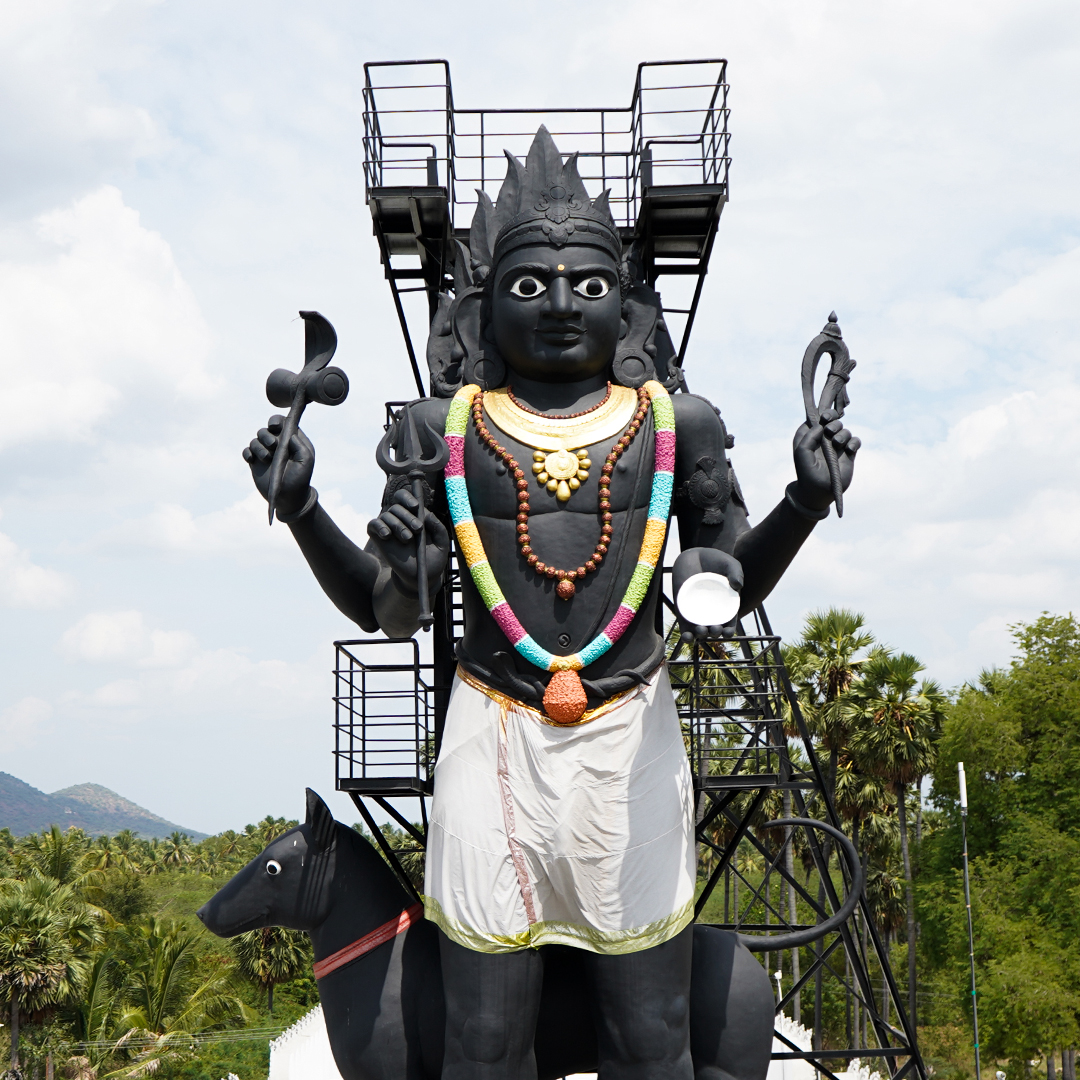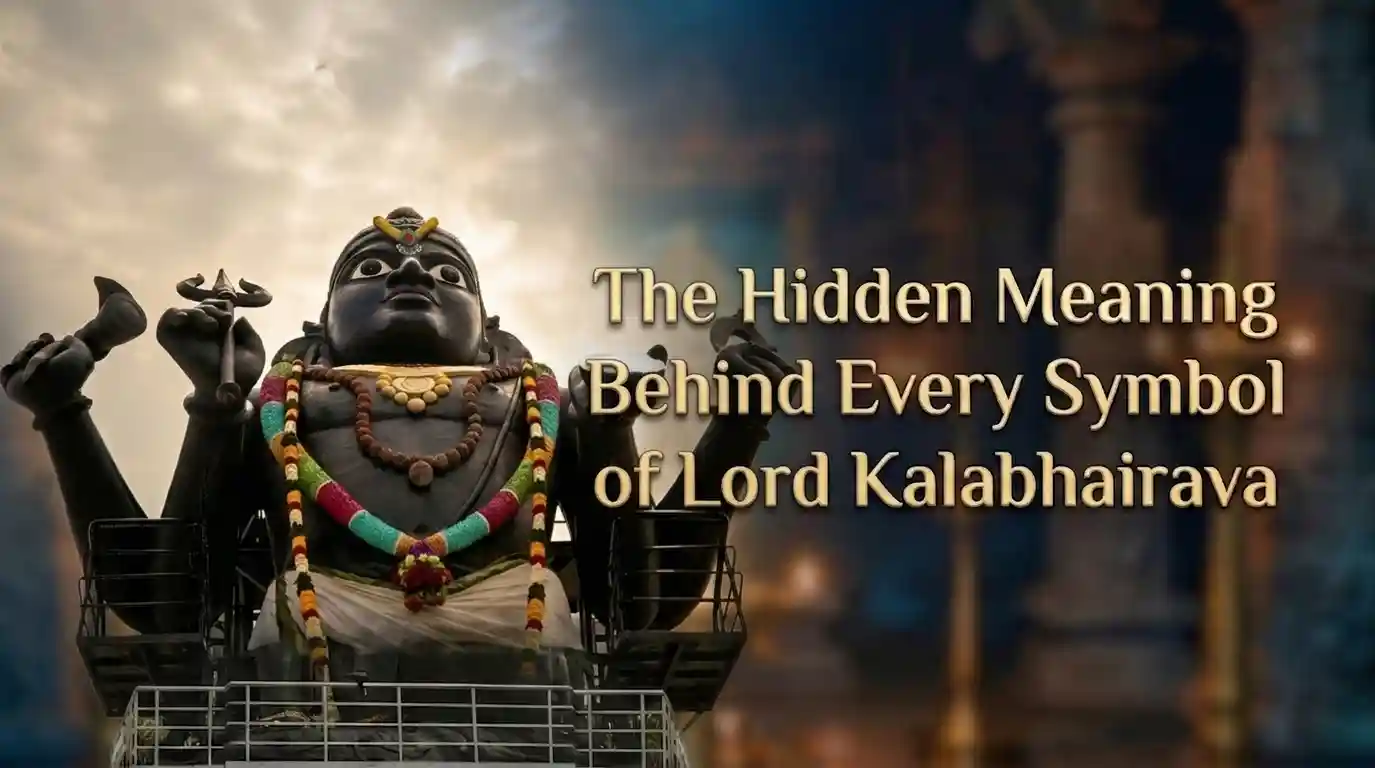
When devotees stand before the idol of Lord Kalabhairava, the first thing that often captures their attention is His fierce appearance. The intense gaze, the sacred weapons, the skull, the serpents, and His loyal dog create an image that commands both respect and awe.
But beneath this powerful form lies a message that is surprisingly compassionate.
Kalabhairava is not worshipped to inspire fear. He is revered because He awakens awareness. Every element of His divine form serves as a spiritual reminder that life is precious, time is sacred, and truth should never be ignored.
For centuries, saints and spiritual seekers have understood that the idol of Kalabhairava is more than sacred art—it is a visual scripture. Every symbol silently teaches a lesson about discipline, humility, courage, and the journey toward self-realization.
Let’s explore the profound wisdom hidden within His divine form.
Why Does Lord Kalabhairava Appear Fierce?
At first glance, Kalabhairava’s form may seem intimidating. Yet His fierce appearance is not a symbol of anger—it is a symbol of divine justice.
In Hindu philosophy, Kalabhairava is regarded as the guardian of Time (Kala). Time is impartial. It rewards discipline, exposes falsehood, and eventually transforms everything in existence.
His powerful form reminds us that the universe operates according to truth and righteousness. He destroys ignorance—not people. He removes ego—not compassion.
The fierceness of Kalabhairava represents the courage required to confront our own weaknesses and transform them into wisdom.
The Trident (Trishula): Balance Between Body, Mind, and Soul
The Trident is one of the most recognizable symbols carried by Lord Kalabhairava.
While it represents divine power, it also teaches a deeper lesson about inner harmony.
The three prongs are often understood as representing:
- The Body
- The Mind
- The Soul
A peaceful life is possible only when these three aspects exist in balance.
Spiritually, the Trident also reminds us to overcome the three impurities that often cloud human consciousness—ego, attachment, and ignorance.
Rather than fighting the outside world, the Trident encourages us to master the world within.
The Damaru: The Rhythm of Time and New Beginnings
The small hourglass-shaped drum, known as the Damaru, symbolizes the eternal rhythm of creation.
Every beat reminds us that life is constantly changing.
Nothing remains the same forever.
Every ending becomes the beginning of something new.
The Damaru invites us to release regrets about the past and welcome each day as an opportunity for growth. It teaches that transformation is not something to fear—it is the very nature of existence.
The Skull (Kapala): A Reminder of Impermanence
Among the most thought-provoking symbols associated with Kalabhairava is the Kapala, or sacred skull.
Far from representing death alone, it speaks of life’s greatest truth:
Everything material is temporary.
Wealth, power, beauty, fame, and social status eventually fade with time.
What truly endures is one’s character, compassion, actions, and spiritual evolution.
The Kapala gently reminds us not to become prisoners of ego but to invest in values that remain meaningful beyond worldly success.
The Sacred Dog: Loyalty, Protection, and Awareness
One of the most unique aspects of Lord Kalabhairava is His divine companion—the Dog.
In spiritual symbolism, the dog represents unwavering loyalty, alertness, and faithfulness.
It remains watchful, protective, and deeply devoted.
These qualities reflect the mindset every spiritual seeker should cultivate.
Just as the dog remains aware of its surroundings, we too should remain mindful of our thoughts, choices, and actions.
True devotion is not only about worship—it is about living with sincerity, integrity, and constant awareness.
The Ever-Watchful Eyes: Living with Awareness
The penetrating eyes of Kalabhairava symbolize awakened consciousness.
Nothing escapes divine awareness.
Rather than seeing this as surveillance, spiritual traditions interpret it as a reminder that every thought, every word, and every action shapes our destiny.
When we become more conscious of how we live, we naturally begin making wiser decisions.
Awareness is the beginning of transformation.
The Serpents: Mastery Over Fear and Inner Energy
Serpents adorning Lord Kalabhairava are often misunderstood.
In yogic philosophy, snakes symbolize Kundalini energy, spiritual awakening, and mastery over primal instincts.
They teach that fear itself can become a doorway to wisdom when approached with awareness.
Instead of running away from challenges, spiritual growth invites us to face them with courage and self-control.
The serpent reminds us that true strength comes from mastering ourselves—not dominating others.
What the Idol of Kalabhairava Teaches About Life
Every sacred symbol in Kalabhairava’s form points toward practical wisdom that can transform everyday living.
His divine presence encourages us to:
- Honor the value of time.
- Let go of ego before it limits our growth.
- Live with honesty and integrity.
- Face challenges with courage instead of fear.
- Stay disciplined in both thought and action.
- Make decisions with awareness rather than impulse.
- Protect righteousness while treating others with compassion.
These teachings remain as relevant today as they were thousands of years ago.
Kalabhairava: More Than a Fierce Deity
Many people initially approach Lord Kalabhairava seeking protection from obstacles or negative influences.
Over time, however, they discover something far deeper.
Kalabhairava is not merely a fierce guardian—He is a spiritual teacher.
His idol silently communicates truths that words often fail to express.
Every symbol invites us to become more disciplined, more compassionate, more fearless, and more conscious of how we spend the precious gift of time.
Seen through this perspective, His fierce appearance transforms into an expression of unconditional guidance.
The idol of Lord Kalabhairava is much more than a sacred sculpture.
It is a timeless spiritual map.
The Trident teaches balance.
The Damaru celebrates renewal.
The Skull reminds us of life’s impermanence.
The Sacred Dog embodies loyalty and vigilance.
The Serpents symbolize inner awakening and mastery over fear.
When we look beyond the external form and understand these deeper meanings, Kalabhairava no longer appears as a fearsome deity. Instead, He becomes a compassionate guide who inspires us to live with wisdom, discipline, humility, and unwavering faith.
In the end, perhaps the greatest blessing of Lord Kalabhairava is not simply protection—it is the awakening of the higher self, where every moment becomes an opportunity to walk the path of truth, courage, and spiritual freedom.