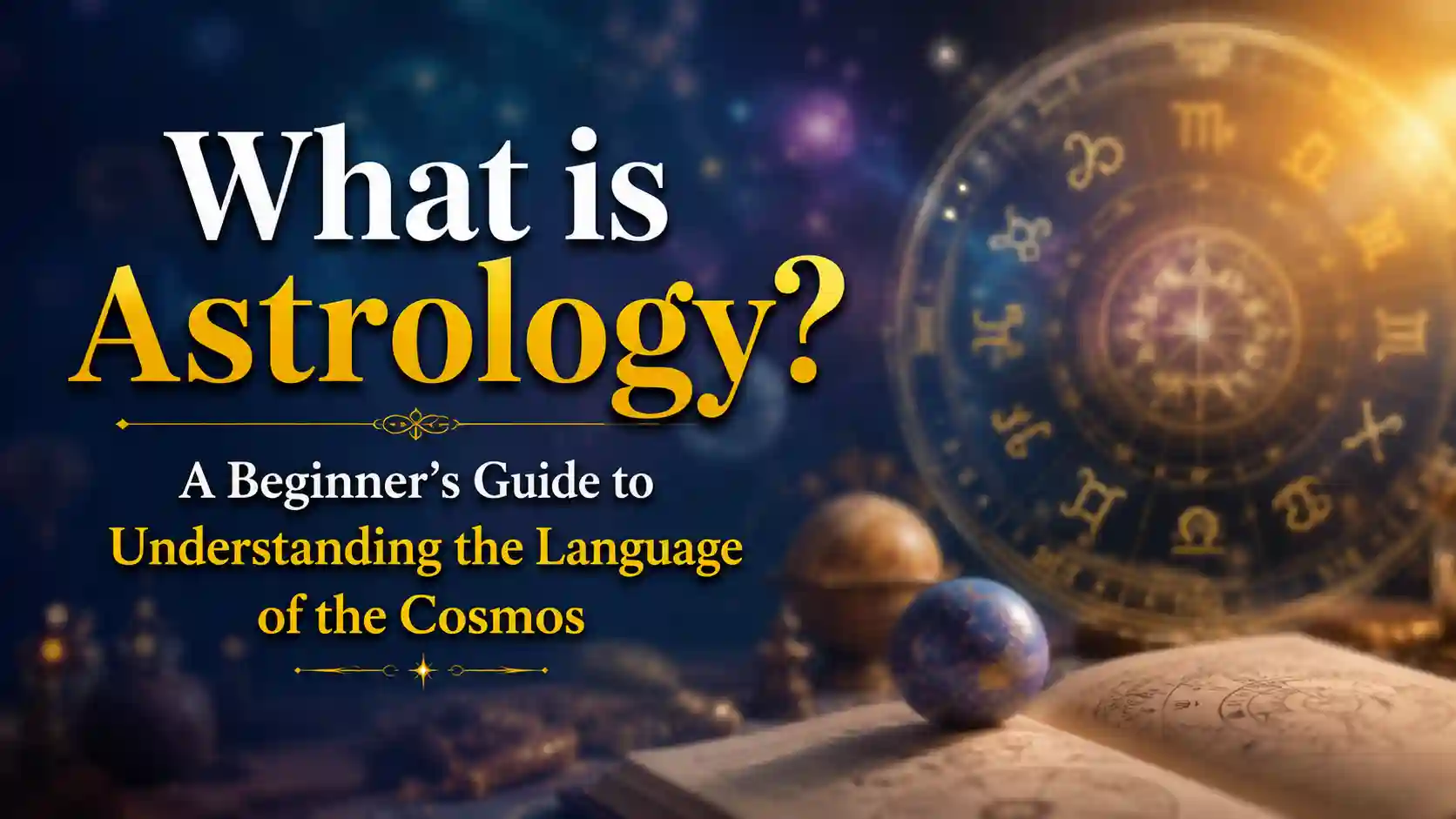
What is Astrology?
Have you ever wondered why two people born on the same day can have completely different personalities? Or why some periods in life seem effortless while others feel filled with unexpected challenges?
For thousands of years, people across different civilizations have looked toward the sky—not simply to predict the future, but to better understand themselves, their purpose, and the natural rhythms of life. This ancient tradition of interpreting celestial patterns is what we call Astrology today.
Contrary to popular belief, astrology is not about superstition or blind prediction. At its deepest level, astrology is a symbolic language that helps us understand the relationship between celestial movements and human experiences.
Whether you are completely new to astrology or simply curious about how it works, this guide will explain everything in simple, easy-to-understand language.
What Exactly is Astrology?
Astrology is an ancient system of knowledge that studies the positions and movements of the Sun, Moon, planets, and stars at a specific moment—especially the moment of birth—to understand personality traits, life patterns, strengths, challenges, and opportunities.
Instead of saying,
“The planets control your life,”
professional astrologers understand astrology differently:
The planets don’t force events—they symbolize energies and timing.
Think of astrology like a weather forecast.
A weather report doesn’t create rain.
It simply tells you when rain is more likely.
Similarly, astrology doesn’t create your destiny.
It helps you understand the cosmic climate surrounding different phases of your life.
The Origin of Astrology
Astrology is one of the oldest recorded sciences in human history.
Ancient civilizations carefully observed the sky and discovered recurring patterns between celestial movements and earthly events.
Some of the world’s earliest astrological traditions developed in:
- Ancient India (Vedic Astrology)
- Babylon
- Egypt
- Greece
- China
Among these traditions, Vedic Astrology (Jyotish Shastra) is considered one of the oldest continuously practiced astrological systems in the world.
The Sanskrit word Jyotish means:
“The Science of Light.”
Rather than predicting random events, Jyotish aims to illuminate life’s path through deeper self-awareness and spiritual understanding.
Why Do People Believe in Astrology?
This is one of the questions people ask most often.
The answer is surprisingly practical.
Many people turn to astrology because it offers guidance during life’s important decisions.
People often seek astrological insights for:
- Career planning
- Marriage compatibility
- Relationships
- Health awareness
- Financial planning
- Education
- Business decisions
- Spiritual growth
- Personal development
Rather than replacing logic, astrology is often used alongside thoughtful decision-making.
How Does Astrology Work?
Imagine taking a photograph of the sky at the exact moment you were born.
That snapshot becomes your Birth Chart (also called a Natal Chart).
The birth chart records:
- Position of the Sun
- Position of the Moon
- Position of the planets
- Zodiac signs
- Twelve astrological houses
- Planetary relationships (aspects)
This chart serves as a symbolic map of your life’s potential.
Professional astrologers analyze these placements to understand recurring themes rather than fixed outcomes.
The Three Foundations of Astrology
1. Zodiac Signs


The zodiac consists of 12 signs, each representing different personality characteristics.
These include:
- Aries
- Taurus
- Gemini
- Cancer
- Leo
- Virgo
- Libra
- Scorpio
- Sagittarius
- Capricorn
- Aquarius
- Pisces
Each sign reflects unique qualities, strengths, motivations, and behavioral tendencies.
2. Planets
In astrology, every planet symbolizes a specific area of life.
For example:
| Planet | Represents |
|---|---|
| Sun | Identity, confidence, purpose |
| Moon | Emotions, mind, intuition |
| Mercury | Communication, learning |
| Venus | Love, beauty, relationships |
| Mars | Energy, courage, action |
| Jupiter | Wisdom, expansion, fortune |
| Saturn | Discipline, responsibility |
| Rahu | Ambition, worldly desires |
| Ketu | Spirituality, detachment |
3. Twelve Houses
Astrologers organize every birth chart into twelve distinct houses, each representing a different area of life.
Each house represents different aspects of life.
Examples include:
- Self
- Family
- Education
- Career
- Marriage
- Wealth
- Health
- Children
- Spirituality
- Travel
The interaction between planets, signs, and houses forms the foundation of astrological interpretation.
Is Astrology the Same as Horoscope?
No.
This is a common misconception.
A horoscope is usually a short daily, weekly, or monthly forecast.
Astrology is the broader system that includes:
- Birth chart analysis
- Planetary periods (Dashas)
- Transits
- Compatibility analysis
- Timing techniques
- Spiritual guidance
- Psychological insights
Relying only on a daily horoscope offers just a tiny glimpse of astrology, much like viewing a vast landscape through a keyhole.
Vedic Astrology vs Western Astrology
| Vedic Astrology | Western Astrology |
|---|---|
| Based on Sidereal Zodiac | Based on Tropical Zodiac |
| Includes Dasha system | Focuses more on psychological interpretation |
| Strong emphasis on karma | Strong emphasis on personality |
| Ancient Indian origin | Greco-Roman evolution |
| Widely used for life timing | Commonly used for self-discovery |
Both systems have value, but they approach astrology differently.
Can Astrology Predict the Future?
The honest answer is:
Not with absolute certainty.
Astrology identifies:
- Probable trends
- Favorable periods
- Challenging phases
- Opportunities
- Areas requiring caution
Human choices, effort, environment, and circumstances continue to play a significant role.
Many experienced astrologers prefer saying:
Astrology reveals possibilities—not guarantees.
Common Myths About Astrology
Myth 1: Astrology Controls Your Life
Reality:
Astrology reflects tendencies, not rigid fate.
Myth 2: Only Your Sun Sign Matters
Reality:
Your birth chart contains dozens of important factors.
Myth 3: Astrology is Magic
Reality:
Traditional astrology is based on centuries of observation, symbolism, mathematical calculations, and interpretation.
Myth 4: Bad Planets Bring Only Bad Luck
Reality:
Even challenging planetary placements often encourage growth, discipline, wisdom, and transformation.
Benefits of Learning Astrology
Astrology can help individuals:
- Understand themselves better
- Improve relationships
- Recognize strengths
- Accept weaknesses
- Make informed decisions
- Develop patience during difficult periods
- Strengthen spiritual awareness
For many people, astrology becomes a tool for self-reflection rather than fear.
Is Astrology Scientific?
This question often sparks debate.
Modern science has not established astrology as a predictive science, and there is no broad scientific consensus that planetary positions directly influence human events.
However, astrology continues to be studied and practiced as a traditional knowledge system, symbolic framework, and cultural heritage in many parts of the world. Millions of people use it for self-reflection, spiritual guidance, and understanding life cycles.
It is helpful to approach astrology with both curiosity and critical thinking, recognizing the difference between personal belief, tradition, and scientific evidence.
Should Beginners Learn Astrology?
Absolutely.
But begin with the fundamentals.
Learn about:
- Zodiac signs
- Planets
- Houses
- Ascendant (Lagna)
- Moon sign
- Planetary aspects
- Dashas
- Transits
Building a strong foundation makes advanced concepts much easier to understand.
Frequently Asked Questions (FAQ)
Is astrology real?
Astrology is a traditional system of symbolic interpretation that many people use for guidance and self-reflection. It is not accepted by mainstream science as a proven predictive science.
What is the difference between astrology and astronomy?
Astronomy is the scientific study of celestial objects and the universe. Astrology interprets the symbolic meaning of celestial positions in relation to human life.
What do I need to start learning astrology?
Your birth date, exact birth time, and birthplace are the key details needed to create an accurate birth chart.
Which astrology system is oldest?
Vedic Astrology (Jyotish) is among the world’s oldest continuously practiced astrological traditions.
Can astrology predict marriage or career?
Astrology is commonly used to analyze relationship and career trends, but experienced astrologers view these as probabilities rather than certainties.
Final Thoughts
Astrology is far more than reading a daily horoscope or predicting lucky numbers.
Whether you view astrology as a spiritual discipline, a cultural tradition, or a tool for personal growth, its greatest value lies in helping you understand yourself more deeply.
The stars may suggest possibilities, but your choices, actions, and character shape the path you ultimately follow.