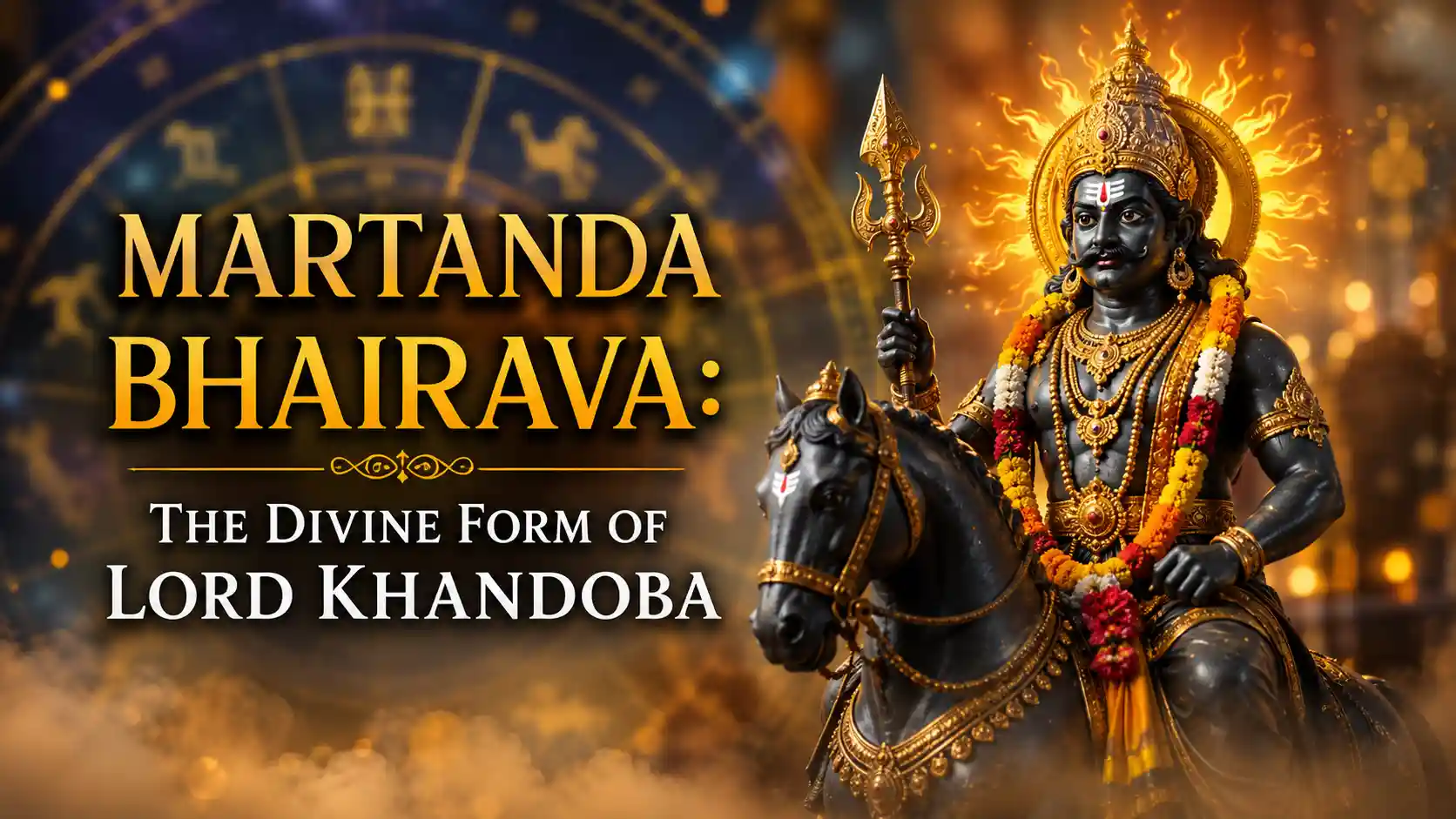
If you have ever visited a Khandoba temple in Maharashtra or Karnataka, you may have noticed something fascinating. Lord Khandoba is not always described simply as a regional deity. In many devotional traditions, he is revered as a powerful manifestation of Lord Shiva, closely associated with the fierce and protective energy of Bhairava.
One of the most intriguing names connected with Khandoba is Martanda Bhairava.
The name itself carries a deep spiritual meaning. It brings together the imagery of the radiant Sun (Martanda) and the fierce protective aspect of Shiva (Bhairava). Together, this form represents divine power that destroys evil, protects devotees and restores righteousness.
But how did Khandoba become associated with Martanda Bhairava?
And what is the story behind this fascinating divine form?
Let us explore the traditional story, symbolism and spiritual significance of Martanda Bhairava.
Who Is Martanda Bhairava?
Martanda Bhairava is traditionally regarded as a form of Lord Shiva and is strongly associated with the worship of Lord Khandoba, particularly in Maharashtra and parts of Karnataka.
Khandoba is popularly known by several names, including:
- Khanderaya
- Malhari Martand
- Malhari
- Martanda
- Martanda Bhairava
Among these, Malhari Martand and Martanda Bhairava are especially important in traditional Khandoba worship.
The name reflects two powerful aspects of divinity.
Martanda is traditionally connected with the Sun and its radiant, life-giving energy.
Bhairava, meanwhile, represents a fierce and protective manifestation of Shiva.
So, Martanda Bhairava can be understood symbolically as a divine force combining radiance, courage, protection and destruction of negative forces.
This combination is one reason the form has remained spiritually significant for generations of devotees.
The Story of Khandoba and the Demons Mani and Malla
The central legend surrounding Khandoba’s manifestation revolves around two powerful demons known as Mani and Malla.
According to traditional accounts, the two demons became a threat to sages, devotees and the forces of righteousness. Their growing power created fear and disturbance.
The gods and sages sought divine intervention.
It was then that Lord Shiva manifested as Martanda Bhairava, taking a powerful warrior form to confront the demons.
Mounted on a horse and carrying divine weapons, Khandoba entered the battlefield.
The encounter between the divine warrior and the demons became a symbolic struggle between dharma and adharma.
After a fierce battle, Martanda Bhairava defeated Malla.
Mani, however, is described differently in several traditional versions of the story. Rather than simply being portrayed as an enemy destroyed by divine power, he ultimately submits to Khandoba and becomes associated with his worship.
This part of the legend is particularly interesting because it shows an important theme found in Indian spiritual traditions: transformation through surrender.
The story is not only about defeating an external enemy. It can also be interpreted as the transformation of ego, pride and destructive tendencies through devotion.
Why Is Khandoba Called Martanda Bhairava?
The connection between Khandoba and Martanda Bhairava comes from the traditional understanding of Khandoba as a manifestation of Shiva.
The word Bhairava carries the idea of a powerful and fearsome protector. In Shaiva traditions, Bhairava is associated with removing fear, confronting negativity and protecting sacred spaces.
Khandoba’s warrior character fits naturally into this symbolism.
At the same time, the name Martanda introduces solar imagery.
The Sun represents:
- Light
- Strength
- Vitality
- Awareness
- Leadership
- Removal of darkness
When these ideas come together, Martanda Bhairava becomes a powerful symbol of divine light overcoming darkness.
For devotees, this is more than mythology. It becomes a spiritual reminder to face difficulties with courage and maintain faith during challenging periods.
The Symbolism Behind Martanda Bhairava
One of the beautiful aspects of Hindu devotional traditions is that a deity’s form often carries several layers of symbolism.
Martanda Bhairava is no exception.
1. The Horse – Symbol of Speed and Power
Khandoba is traditionally depicted riding a horse.
The horse represents movement, strength and readiness.
It also reflects the image of a divine warrior who responds quickly when righteousness is threatened.
For devotees, the horse can symbolically represent the ability to move forward rather than remaining trapped by fear or hesitation.
2. The Sword – Courage to Face Challenges
The sword carried by Khandoba represents the destruction of evil forces.
On a spiritual level, it can also be understood as the power of discrimination—the ability to distinguish truth from falsehood and courage from fear.
The real battle, in this interpretation, is not always outside us.
Sometimes it happens within.
3. The Sun – Light and Awareness
The Martanda aspect connects Khandoba with solar symbolism.
The Sun does not discriminate when it gives light. It simply shines.
This makes solar imagery a powerful metaphor for awareness, clarity and spiritual awakening.
4. Bhairava – Protection and Fearlessness
The Bhairava aspect brings another dimension.
Bhairava is traditionally associated with protection, courage and the destruction of negative influences.
This is why devotees may approach Khandoba during difficult periods, seeking strength and divine protection.
Khandoba and the Devotion of His Followers
Khandoba worship has a particularly strong cultural presence in Maharashtra and Karnataka.
He is deeply connected with the lives and traditions of many communities.
The famous Jejuri Khandoba Temple in Maharashtra is one of the most important pilgrimage centres associated with Khandoba.
During festivals and special occasions, devotees gather in large numbers to express their devotion.
The atmosphere of Khandoba worship is distinctive. Turmeric, devotional songs, traditional rituals and powerful chants create an experience that is both spiritual and cultural.
For many families, Khandoba is not simply a temple deity. He is regarded as a family deity, or Kuladevata, and his worship becomes part of family traditions passed from one generation to another.
Why Turmeric Is Important in Khandoba Worship
Anyone familiar with Jejuri has probably heard about the spectacular use of turmeric during Khandoba celebrations.
Turmeric, known as bhandara in this devotional context, is strongly associated with Khandoba worship.
The bright yellow colour creates a striking visual atmosphere around the temple and during celebrations.
Traditionally, turmeric is associated with auspiciousness, purity and prosperity.
Its presence in Khandoba worship therefore carries both ritual and cultural significance.
For visitors, the experience can be unforgettable—the entire temple environment can appear covered in golden-yellow turmeric.
Martanda Bhairava as a Symbol of Inner Strength
The story of Martanda Bhairava can be understood at another level too.
Mani and Malla may be viewed symbolically as representing the negative qualities that can dominate human life—ego, arrogance, uncontrolled desire and pride.
In this interpretation, the battlefield becomes the human mind.
The divine warrior represents the inner strength required to overcome these tendencies.
This gives the Khandoba story a surprisingly modern relevance.
We may not fight physical demons today, but we all encounter fear, anger, confusion, insecurity and self-doubt.
The spiritual message of Martanda Bhairava reminds devotees that courage does not mean having no difficulties.
It means finding the strength to face them.
Martanda Bhairava and the Victory of Dharma
The battle between Khandoba and the demons ultimately represents the victory of dharma over adharma.
This is a recurring theme throughout Hindu sacred traditions.
Whenever destructive forces become dominant, divine intervention restores balance.
Khandoba’s warrior form expresses this idea in a particularly vivid way.
He does not represent passive strength.
He represents active protection.
This is one reason devotees continue to connect deeply with the deity.
The Spiritual Message Behind the Legend
At first glance, the story of Martanda Bhairava may appear to be a traditional tale about a divine warrior defeating demons.
But when we look deeper, the story offers several spiritual lessons.
Courage: Difficult situations cannot always be avoided. Sometimes they must be faced.
Surrender: The story of Mani reminds devotees of the transformative power of surrender.
Protection: Divine protection is a central theme in Bhairava-related traditions.
Awareness: The Martanda or solar aspect represents light overcoming darkness.
Dharma: The victory of Khandoba represents the restoration of righteousness.
These ideas help explain why the story continues to resonate with devotees even today.
Why Devotees Worship Lord Khandoba
People approach Khandoba with different prayers and intentions.
Some seek courage during difficult circumstances.
Others worship him as their family deity and continue traditions inherited from their ancestors.
For some devotees, Khandoba represents protection and strength.
For others, the deity’s story is a reminder that divine grace can help overcome obstacles.
There is no single emotional reason behind devotion.
That is perhaps one of the most beautiful aspects of living spiritual traditions—they can mean something different to each person.
Martanda Bhairava: More Than a Warrior Deity
The story of Martanda Bhairava is not simply about a battle between a god and two demons.
It is a story about light and darkness, courage and fear, pride and surrender, and dharma and adharma.
Khandoba’s identity as Martanda Bhairava brings together the radiant symbolism of the Sun with the fierce protective energy of Bhairava.
That combination gives this divine form a unique place in Shaiva and regional devotional traditions.
Whether you encounter Khandoba at Jejuri, learn about him through family traditions, or discover his story for the first time, the legend of Martanda Bhairava offers something worth reflecting upon.
Perhaps the deepest message is simple:
The greatest victory is not merely defeating an enemy outside us, but overcoming the darkness within.
Frequently Asked Questions About Martanda Bhairava
Is Martanda Bhairava another name for Khandoba?
In traditional Khandoba worship, Martanda Bhairava is one of the important names and forms associated with Lord Khandoba, who is regarded as a manifestation of Shiva.
Who are Mani and Malla?
Mani and Malla are the two demons featured in the traditional Khandoba legend. Khandoba, in his warrior form, defeats them and restores dharma.
Why is Khandoba associated with Bhairava?
Khandoba is traditionally understood as a manifestation of Shiva, and the Bhairava aspect emphasizes his fierce, protective and warrior-like nature.
Why is turmeric associated with Khandoba?
Turmeric, particularly bhandara, has a strong traditional association with Khandoba worship. It is prominently used during festivals and rituals, especially at Jejuri.
Where is Khandoba mainly worshipped?
Khandoba has a particularly strong devotional following in Maharashtra and Karnataka, with Jejuri being one of the most famous pilgrimage centres associated with him.
Final Thoughts
The legend of Martanda Bhairava continues to live through temples, festivals, family traditions and devotional practices.
For some, Khandoba is the powerful warrior who defeated Mani and Malla. For others, he is a beloved family deity. And for many devotees, Martanda Bhairava represents the courage to face life’s challenges with faith.
The story ultimately invites us to look beyond the battlefield of mythology and into our own lives.
What are the fears we need to overcome?
What kind of darkness are we carrying within?
And where can we find the courage to move forward?
Perhaps that is why the story of Martanda Bhairava has remained meaningful for generations—it is ancient in its telling, yet surprisingly personal in its message.