There are some products that catch our attention not simply because they look beautiful, but because they carry a story.
A story connected to nature, tradition, craftsmanship, and beliefs passed down through generations.
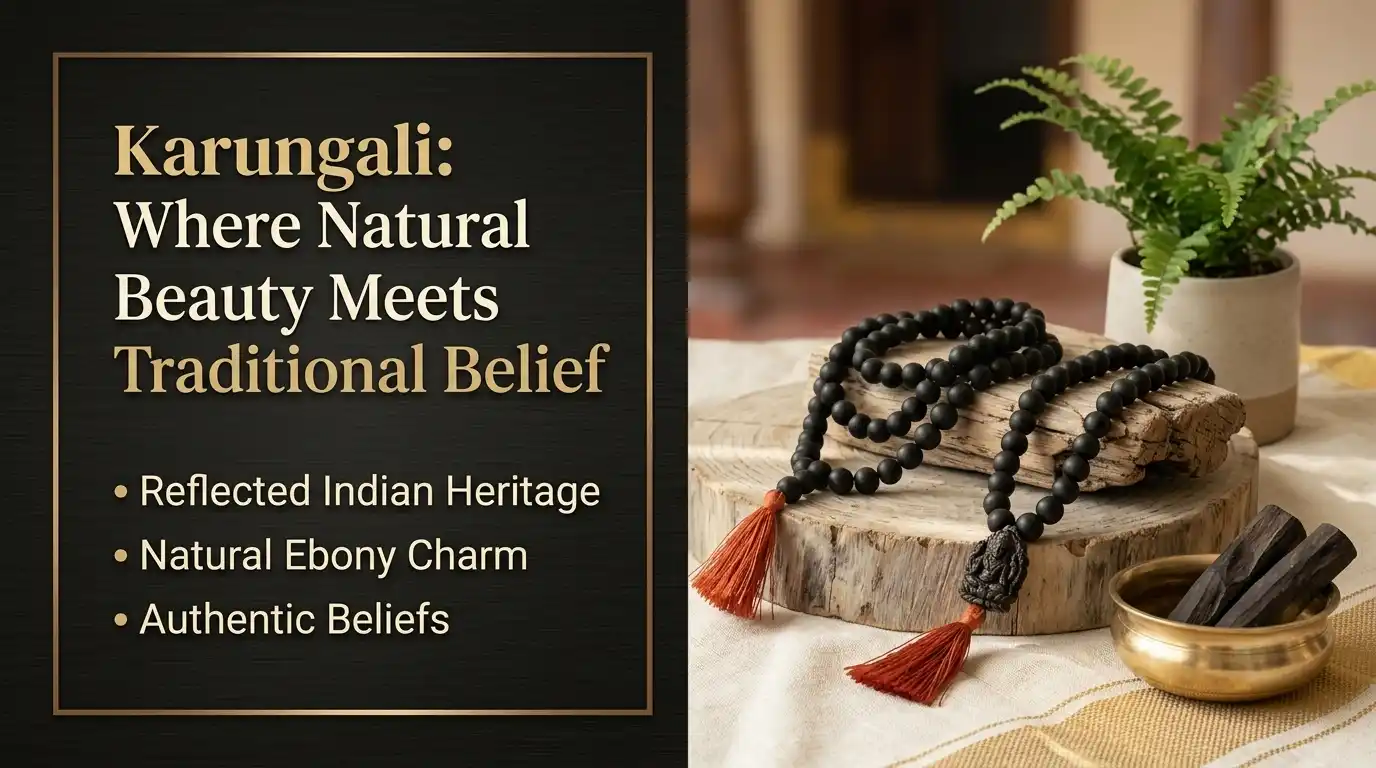
Karungali is one such name that continues to attract people who appreciate traditional and naturally sourced products. Its deep, dark appearance and traditional association give it a distinctive character that feels very different from modern, mass-produced items.
But what makes Karungali special? Why has it been associated with traditional beliefs for generations? And what should you actually look for when choosing a Karungali product?
Let’s explore it in a simple and practical way.
What Is Karungali?
Karungali is traditionally associated with natural materials and has a strong connection with Indian cultural practices.
One of the first things people notice is its naturally dark appearance. Unlike products that are designed purely for visual appeal, traditional Karungali products are often valued for the sense of heritage and simplicity they represent.
For many people, it is not just about owning an object. It is about keeping a small connection with traditional practices alive.
At the same time, the meaning and beliefs associated with Karungali can differ from one region or family tradition to another. So, it is useful to understand it within its cultural context rather than treating every traditional claim as a proven scientific fact.
The Natural Beauty of Karungali
The beauty of Karungali is quite understated.
Its deep colour, natural appearance, and traditional character give it a simple yet distinctive look. It does not need bright colours or elaborate designs to stand out.
That simplicity is actually part of its appeal.
People who enjoy natural-looking products often prefer materials that retain their original character rather than looking overly processed. Karungali fits naturally into this preference.
Whether displayed as a traditional item or used as part of personal accessories, its appearance can add a subtle sense of heritage.
Why Is Karungali Connected With Traditional Beliefs?
Indian traditions have always had a close relationship with nature.
For generations, people have used materials obtained from trees, plants, seeds, and other natural sources in their everyday lives and cultural practices. Many of these practices were passed from parents to children and gradually became part of family traditions.
Karungali is also connected with various traditional beliefs in this way.
Some people choose Karungali products because of their spiritual or cultural significance, while others simply appreciate their traditional value and natural appearance.
It is important, however, to make a clear distinction between traditional belief and scientific evidence.
Traditional beliefs can be meaningful from a cultural and personal perspective, but they should not automatically be presented as scientifically proven health benefits.
This balanced approach helps us appreciate the tradition without making claims that cannot be supported by evidence.
What Makes a Good Karungali Product?
If you are thinking about buying a Karungali product, appearance should not be the only thing you consider.
A little attention to quality and authenticity can make a big difference.
1. Check the Material
Before buying, ask the seller what material has been used and how the product has been made.
A trustworthy seller should be able to provide clear information about the product instead of relying only on vague traditional claims.
2. Look at the Craftsmanship
Take a closer look at the finish and overall workmanship.
Depending on the type of product, small variations in texture or appearance may naturally occur. What matters is that the product is properly finished and made with care.
Good craftsmanship is often one of the easiest ways to distinguish a thoughtfully made traditional product from a poorly finished one.
3. Choose a Reliable Seller
If you are purchasing online, take a few minutes to check the seller’s reputation.
Look at customer reviews, product information, photographs, return policies, and other details before making a decision.
A seller who provides transparent information is generally a better choice than one who makes extraordinary claims without explaining the product itself.
4. Be Careful With Overstated Claims
This is particularly important when buying traditional products.
You may come across claims suggesting that a particular product can solve a wide range of health or personal problems.
It is better to approach such claims carefully.
A good product description should focus on things that can actually be explained — such as the material, craftsmanship, traditional significance, design, and intended use.
Karungali in Modern Life
Traditional products still have a place in today’s modern lifestyle.
In fact, there is growing interest in products that feel natural, meaningful, and connected to cultural heritage. People are increasingly looking beyond mass-produced items and exploring products that have a story behind them.
This is where Karungali can feel particularly relevant.
It brings together three things that many people appreciate today:
- Natural-looking beauty
- Traditional cultural value
- A sense of individuality
For someone who enjoys traditional Indian products, a Karungali item can be more than just a purchase. It can be a small reminder of a cultural practice that has been carried forward over generations.
How to Choose Karungali With Confidence
Choosing a traditional product does not have to be complicated.
Start by understanding what you are buying. Ask questions about the material, origin, workmanship, and intended use. Compare sellers rather than making a decision based only on price.
Most importantly, choose a product because you genuinely appreciate its quality and traditional character — not simply because of exaggerated promises.
That approach makes the buying experience more meaningful and helps support genuine traditional craftsmanship.
Final Thoughts
The appeal of Karungali goes beyond its deep natural colour.
Its connection with nature, traditional practices, cultural beliefs, and craftsmanship is what gives it a unique identity.
For some, it may represent a personal connection to tradition. For others, it may simply be an appreciation for natural materials and timeless design.
Whatever the reason, understanding the difference between cultural tradition and scientifically established facts is important.
If you are considering a Karungali product, focus on authenticity, quality, craftsmanship, and transparent information. When chosen thoughtfully, it can be more than an ordinary product — it can be a small piece of tradition that fits naturally into modern life.
Sometimes, the simplest traditional products carry the most interesting stories. And Karungali is one of them.