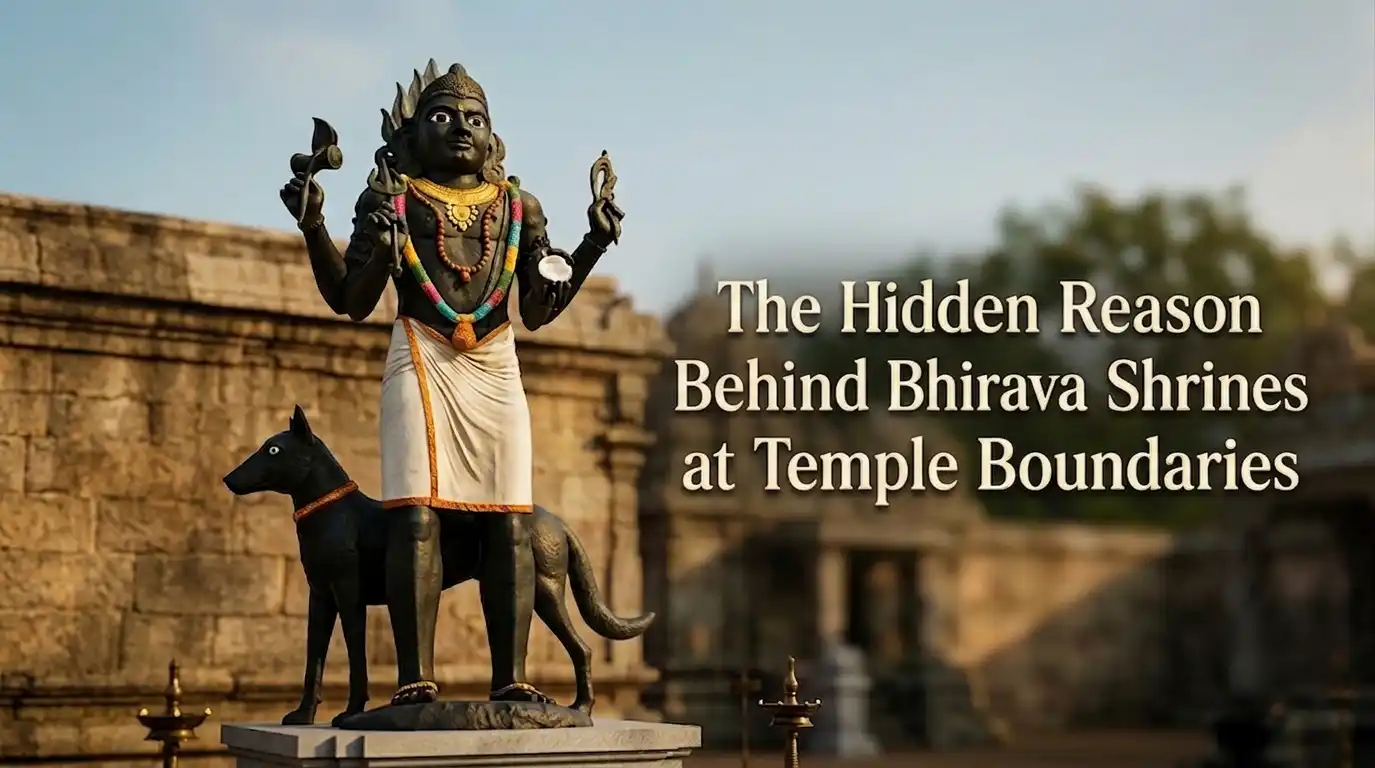
If you have visited Hindu temples, you may have noticed that the shrine of Bhairava is often located outside the main sanctum or near the temple’s boundary. This unique placement raises a common question: Why is the Bhairava shrine positioned at the edge of the temple instead of inside the central complex?
The answer lies in ancient Agamic traditions, spiritual symbolism, and Bhairava’s role as the guardian deity of the temple.
Who Is Bhairava?
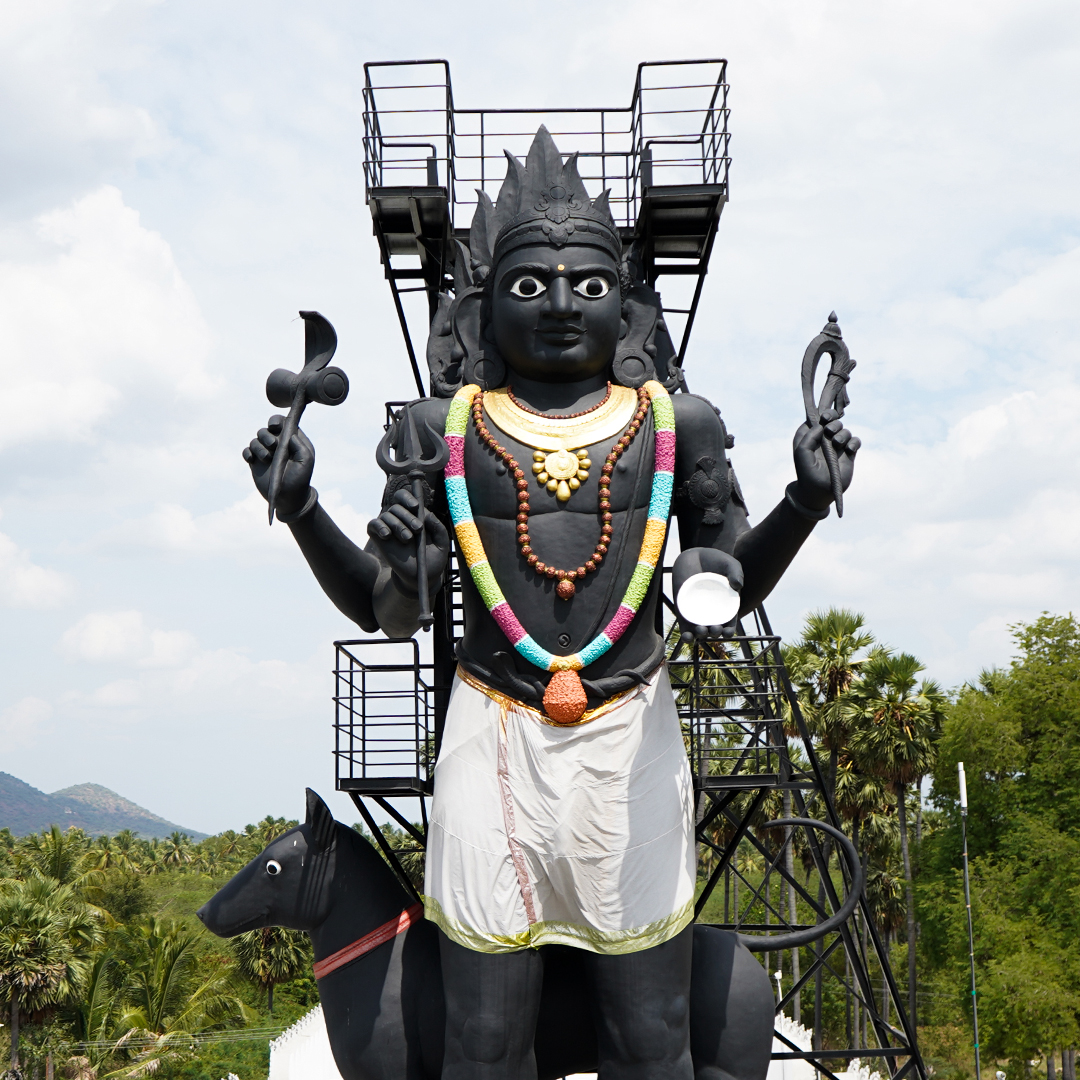
Bhairava is considered a fierce manifestation of Lord Shiva. Among his various forms, Kala Bhairava is especially revered as the lord of time and the protector of sacred spaces. Devotees believe that Bhairava safeguards temples, removes negative influences, and protects worshippers from unseen obstacles.
His powerful presence symbolizes vigilance, discipline, and divine protection.
Bhairava as the Guardian Deity of the Temple
According to Agama Shastras, every temple has a guardian deity responsible for protecting its spiritual energy. Bhairava is often assigned this sacred duty.
As the protector of the temple, Bhairava is positioned at the boundary to watch over the entire temple complex. His presence is believed to prevent harmful influences from entering the sacred space and disturbing its divine vibrations.
This is one of the primary reasons why the Bhairava shrine is usually located at the temple’s outer limits.
Protector Against Negative Energies
Ancient Hindu temples are regarded as powerful centers of spiritual energy. To preserve this sanctity, temples traditionally include protective deities at strategic locations.
Bhairava is believed to stand guard against negative energies, evil forces, and disruptive influences. By placing his shrine at the boundary, devotees symbolically acknowledge his role as the first line of spiritual defense.
Many devotees visit Bhairava before leaving the temple to seek his protection and blessings.
Guardian of the Eight Directions
In Hindu tradition, Bhairava is associated with the concept of the Ashta Bhairavas, the eight forms of Bhairava who protect the eight directions.
Because of this cosmic role, Bhairava is often placed at the perimeter of the temple rather than near the main deity. His location signifies that he watches over the temple from all directions and ensures the safety of the sacred premises.
This placement reflects the ancient understanding of spiritual protection and divine guardianship.
Lord of Time and Cosmic Order
Kala Bhairava is revered as the ruler of time. In many Shiva temples, he is believed to oversee the temple’s spiritual administration, including the opening and closing of sacred energies.
His position at the boundary symbolizes his authority over the flow of time and the order of temple rituals. Devotees pray to him for timely success, discipline, and the removal of delays in life.
Benefits of Worshipping Bhairava
Devotees believe that worshipping Bhairava brings several spiritual and worldly benefits, including:
- Protection from fear and negative influences.
- Relief from obstacles and delays.
- Success in career and business endeavors.
- Protection from enemies and harmful intentions.
- Improvement in legal and financial matters.
- Increased courage, confidence, and mental strength.
- Divine protection for the family and home.
Because of these blessings, Bhairava worship remains an important part of Hindu spiritual practice.
When Should You Worship Bhairava?
The Krishna Paksha Ashtami (the eighth day of the waning moon) is considered especially auspicious for Bhairava worship.
Many devotees also offer prayers to Kala Bhairava on Sundays, Fridays, and during specific temple rituals dedicated to Lord Shiva. Lighting oil lamps and offering prayers at Bhairava shrines are common devotional practices.
The placement of the Bhairava shrine at the temple boundary is far more than a matter of architecture. It represents a profound spiritual principle rooted in Agama traditions and Hindu philosophy.
As the guardian deity and fierce manifestation of Lord Shiva, Bhairava stands watch over the sacred temple space, protecting it from negative influences while blessing devotees with safety, courage, and spiritual strength.
This is why, in many Hindu temples, the Bhairava shrine is traditionally located at the boundary—serving as the eternal guardian of the divine abode.