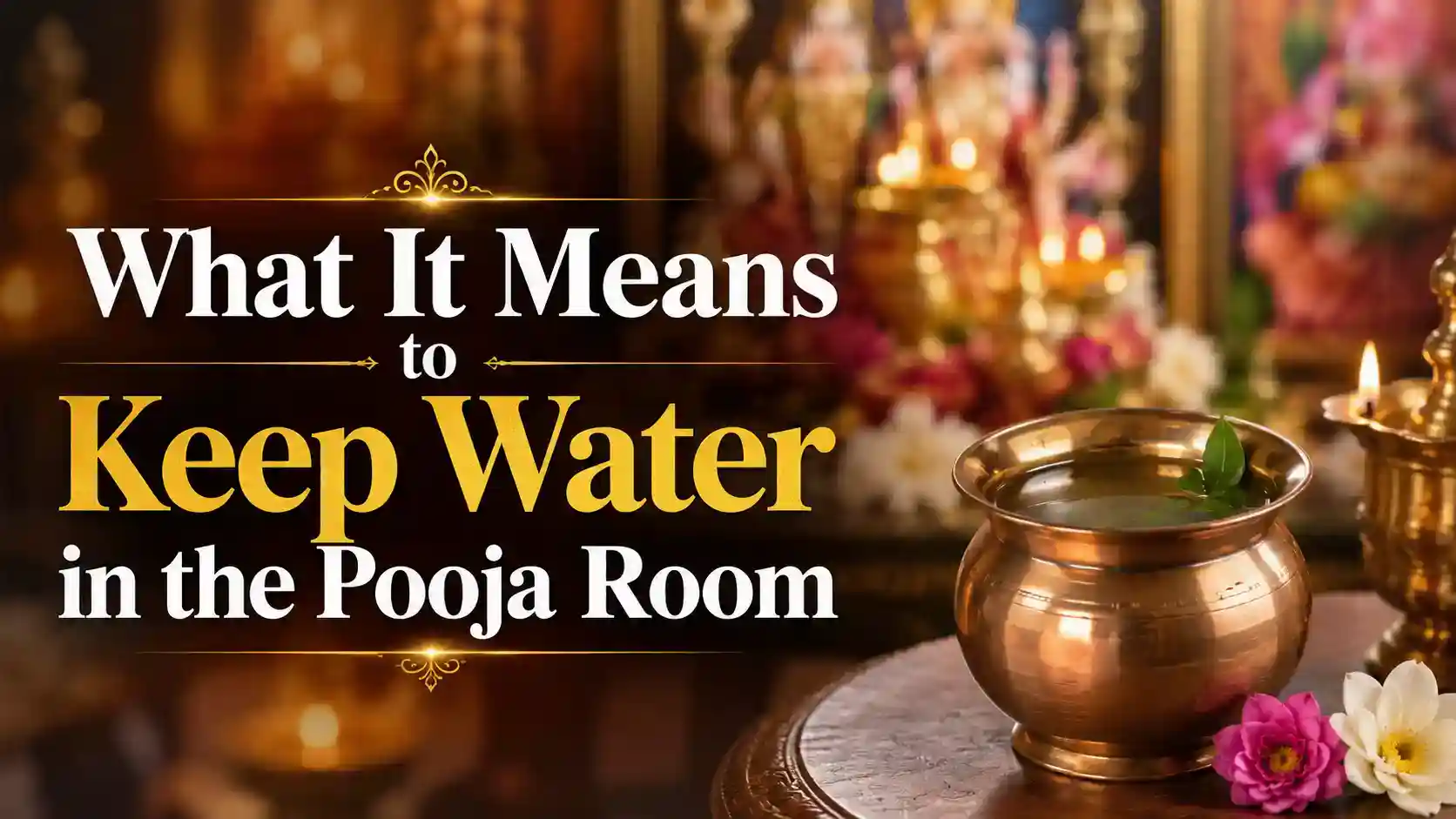
Walk into almost any traditional pooja room and you’ll notice a small vessel — often a copper or brass kalasham — filled with water and placed near the deities. This is not a decorative detail; it is one of the oldest and most symbolically loaded elements of Hindu ritual practice.
Water, in this context, represents the formless, life-sustaining principle that underlies all creation. Before installing an idol or beginning a major ritual, priests traditionally invoke the deity into a kalasham of water, treating the vessel itself as a temporary embodiment of divine presence. This is why a filled kalasham, topped with mango leaves and a coconut, is a fixture at most poojas, weddings, and housewarmings — it stands in as a portable, purified representation of the divine.
On a daily level, keeping a small vessel of water in the pooja room — refreshed each morning — is believed to keep the energy of the space “alive” and receptive. Stagnant or absent water is thought to allow the sacred space to become dull or spiritually inert. Practically speaking, this daily act also enforces a small discipline: it requires the household to visit and tend to the pooja space every day, reinforcing consistency in worship. Some traditions also hold that water absorbs ambient negativity, which is one reason it is replaced regularly rather than left to sit for extended periods.
Why Fresh Water Is Traditionally Preferred
The practice of changing the water every morning also adds a simple sense of cleanliness and renewal to the pooja space. Fresh water can become part of the daily worship routine, much like lighting a lamp or offering flowers. Rather than treating the vessel as a permanent decoration, regularly refreshing it keeps the ritual intentional and meaningful.
A Simple Daily Practice
For many households, the practice is uncomplicated: clean the vessel, fill it with fresh water, and place it respectfully near the deities. The important aspect is not the size or cost of the vessel, but the sense of cleanliness, regularity, and devotion associated with the practice.
Frequently Asked Questions
1. Why is water kept in the pooja room?
Water is traditionally associated with purity, life, renewal, and divine presence. In many Hindu rituals, a kalasham filled with water is treated as a sacred representation of the divine.
2. Should the water in the pooja room be changed every day?
Many traditional households refresh the water every morning as part of maintaining cleanliness and regularity in daily worship.
3. Can a copper or brass vessel be used for keeping water?
Yes. Copper and brass vessels are traditionally used in many Hindu rituals and are commonly associated with kalasham practices.
4. What does the kalasham filled with water symbolize?
The kalasham is traditionally viewed as a sacred vessel representing life, abundance, purity, and the presence of divine energy.
5. Is keeping water in the pooja room compulsory?
No single practice is compulsory for every household. Customs can vary according to family traditions, regional practices, and the form of worship followed.