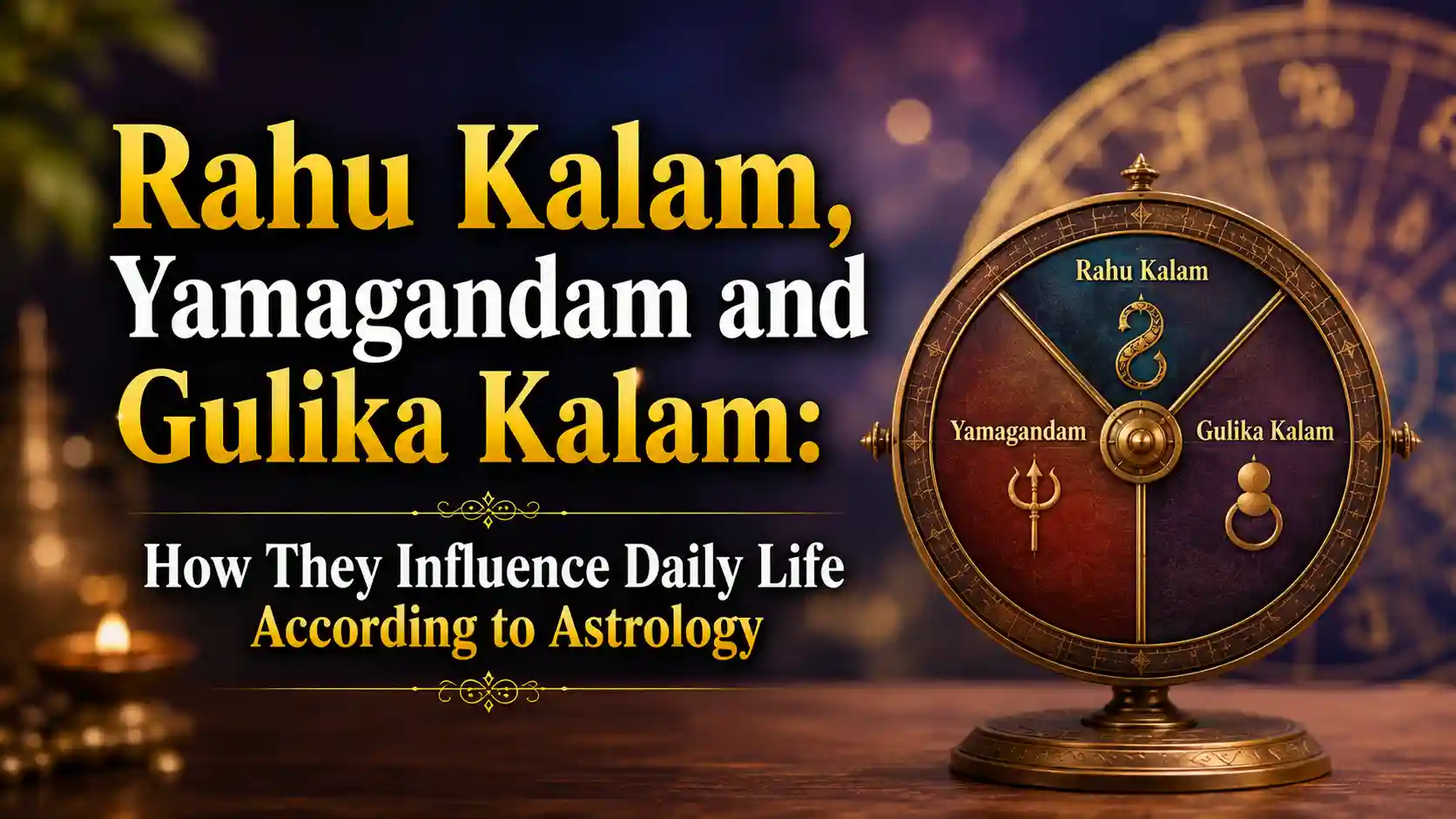
When planning an important event, many people in India check the Panchangam (Hindu calendar) before deciding on the right time. Among the most commonly observed daily time periods are Rahu Kalam, Yamagandam, and Gulika Kalam.
These time periods have been part of traditional Hindu astrology for centuries. While some people strictly avoid beginning important activities during these hours, others consider them reminders to be mindful rather than fearful.
So, what exactly are Rahu Kalam, Yamagandam, and Gulika Kalam? Do they really influence our daily lives? Let’s explore their traditional significance, practical relevance, and how they are commonly used in astrology.
What Are Rahu Kalam, Yamagandam and Gulika Kalam?
In Vedic Astrology, every day from sunrise to sunset is divided into eight equal segments. Three of these segments are traditionally associated with specific planetary influences:
- Rahu Kalam
- Yamagandam
- Gulika Kalam
These periods are considered important while selecting a suitable time (Muhurta) for beginning significant activities.
It is important to understand that these timings are based on traditional astrological beliefs and are not supported by scientific evidence.
Understanding Rahu Kalam
What Is Rahu Kalam?
Rahu Kalam is traditionally associated with Rahu, one of the nine planetary influences (Navagrahas) in Hindu astrology.
Although Rahu is not a physical planet, it is regarded as a shadow planet representing illusion, uncertainty, unexpected events, and material desires.
Because of these symbolic associations, many people avoid starting important activities during Rahu Kalam.
Activities Traditionally Avoided During Rahu Kalam
People following traditional customs often avoid beginning:
- Business ventures
- Property registration
- Marriage discussions
- Job interviews
- New investments
- Travel for important purposes
- Signing contracts
- Housewarming ceremonies
However, routine daily work generally continues as usual.
Activities Considered Acceptable
Traditional beliefs usually allow:
- Worship and prayers
- Meditation
- Temple visits
- Charity
- Continuing already-started work
- Spiritual practices
Many devotees especially worship Goddess Durga or Lord Bhairava during Rahu Kalam, believing these prayers help reduce negative influences.
Understanding Yamagandam
What Is Yamagandam?
Yamagandam is another daily time period mentioned in the Panchangam.
Traditionally, it is associated with Yama, the deity connected with discipline, karma, and the cycle of life and death.
For this reason, many people avoid initiating new ventures during Yamagandam.
Activities Traditionally Avoided During Yamagandam
People often postpone:
- Wedding ceremonies
- Business openings
- Purchasing expensive items
- Property-related activities
- Financial agreements
- Beginning long-distance travel
Again, regular daily responsibilities are generally not affected.
Understanding Gulika Kalam
What Is Gulika Kalam?
Gulika Kalam is linked with Gulika (Mandi), a sub-planet in traditional astrology.
Unlike Rahu Kalam and Yamagandam, opinions regarding Gulika Kalam vary among astrologers.
Some believe it is unsuitable for starting major activities, while others consider it beneficial for long-lasting work because Gulika is traditionally associated with permanence.
Activities Traditionally Associated With Gulika Kalam
Some astrologers believe Gulika Kalam is suitable for:
- Spiritual practices
- Meditation
- Temple worship
- Learning
- Research
- Long-term planning
Others recommend avoiding new financial or family-related beginnings during this period.
Interpretations can differ depending on regional traditions and astrological schools.
How Are These Timings Calculated?
One common misconception is that Rahu Kalam, Yamagandam, and Gulika Kalam occur at the same time every day.
In reality, their timings depend on:
- Sunrise
- Sunset
- Geographic location
- Day of the week
Since daylight duration changes throughout the year, these periods also change daily.
This is why Panchangam timings should always be calculated based on your local sunrise and sunset.
Do These Timings Affect Daily Life?
Many families continue to observe these traditional timings when scheduling important life events.
Common examples include:
- Purchasing a new vehicle
- Registering property
- Launching a business
- Beginning construction
- Wedding-related functions
- Naming ceremonies
- Signing legal agreements
Others view these periods simply as part of India’s rich cultural heritage and choose not to organize their lives around them.
Ultimately, whether to follow these timings is a personal decision influenced by family traditions, faith, and cultural beliefs.
Scientific Perspective
Modern science does not provide evidence that Rahu Kalam, Yamagandam, or Gulika Kalam directly influence human success or failure.
From a scientific viewpoint, these periods do not affect physical events or outcomes.
However, psychology suggests that rituals and traditions can provide emotional comfort, confidence, and a sense of preparedness for many people.
Respecting traditional practices while maintaining practical thinking allows individuals to appreciate both cultural heritage and rational decision-making.
Common Misconceptions
Myth: Nothing should be done during Rahu Kalam.
Reality: Traditional beliefs mainly discourage starting important new activities. Routine work usually continues normally.
Myth: Rahu Kalam guarantees failure.
Reality: There is no scientific evidence supporting this claim. Success depends on preparation, skills, timing, and effort.
Myth: Gulika Kalam is always inauspicious.
Reality: Different astrological traditions interpret Gulika Kalam differently. Some even consider it favourable for long-term activities.
Frequently Asked Questions
What is Rahu Kalam?
Rahu Kalam is a daily time period in traditional Hindu astrology during which many people avoid starting important new activities.
What is Yamagandam?
Yamagandam is another daily period traditionally considered unsuitable for beginning significant ventures according to the Panchangam.
What is Gulika Kalam?
Gulika Kalam is a daily astrological period associated with Gulika (Mandi). Interpretations vary, with some traditions viewing it as neutral or even favourable for certain long-term activities.
Do Rahu Kalam timings remain the same every day?
No. They vary depending on the day’s sunrise, sunset, location, and weekday.
Is there scientific evidence supporting these timings?
No. These timings are rooted in traditional Hindu astrology and cultural beliefs rather than scientific research.
Final Thoughts
Rahu Kalam, Yamagandam, and Gulika Kalam continue to play an important role in the daily lives of millions of people who follow traditional Hindu astrology. For many, these periods provide guidance when choosing an appropriate time for important events, while others appreciate them as valuable cultural traditions.
Whether you observe these timings or not, it is helpful to understand their historical and spiritual significance with an open and balanced perspective. Practical planning, informed decisions, and personal responsibility remain the most important factors in achieving success, while traditional beliefs can continue to serve as meaningful expressions of faith and cultural identity.